
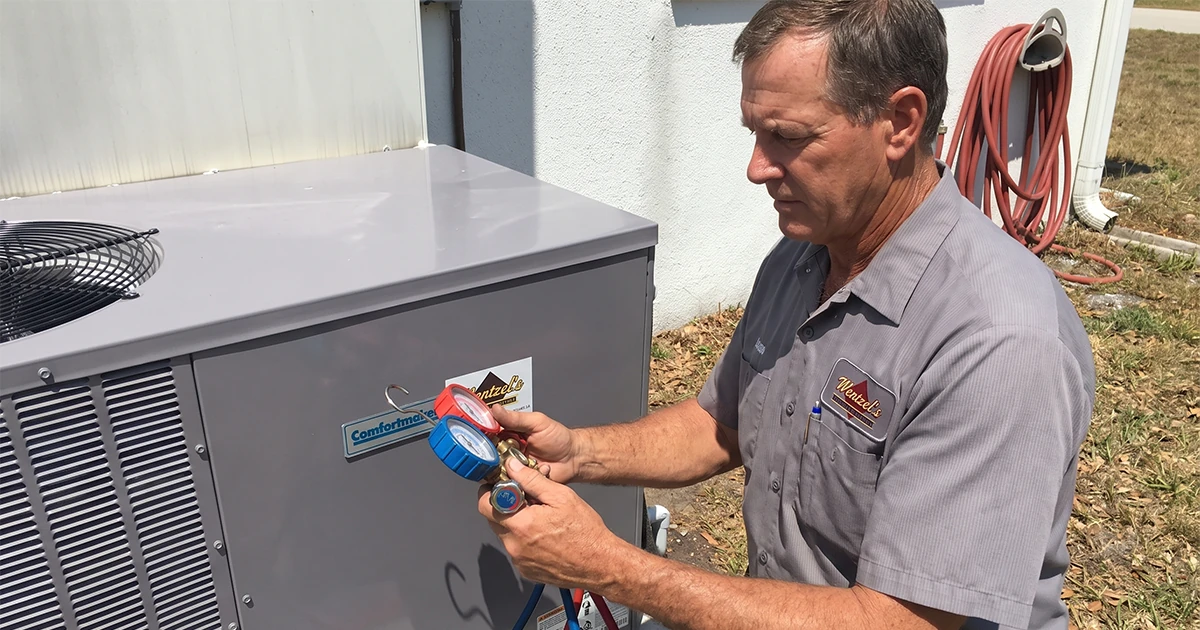
What “Not Cooling” Usually Means
There’s an important difference between an AC that’s dead, no power, no sound, nothing, and one that’s running but not doing its job. A dead system usually points to a breaker, a thermostat, or an electrical part, and that’s its own kind of emergency. A system that’s running, making its usual noise, and still leaving the house warm almost always points to something blocking airflow or robbing the system of the cold it needs to move, and a homeowner can usually narrow it down with the checks below before ever picking up the phone.
Common Causes a Homeowner Can Check
A Dirty Air Filter Choking the Airflow
A filter clogged with dust and pet hair is one of the most common reasons a system runs constantly without actually cooling the house. Restricted airflow across the indoor coil means less cold air makes it into the ducts, and in a lot of cases replacing a filter that hasn’t been changed in months is the entire fix.
Vents Closed or Blocked Somewhere in the House
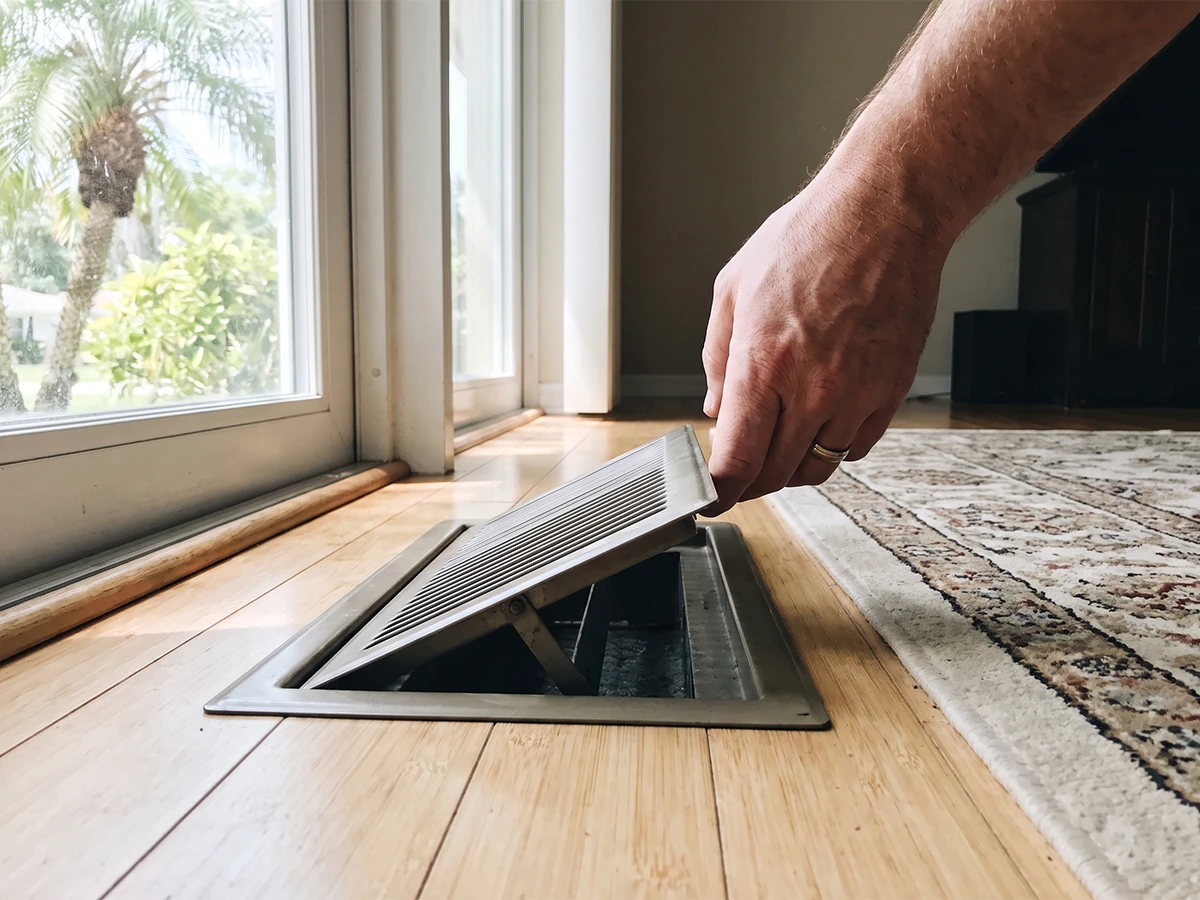
Furniture pushed in front of a return vent, or supply vents closed in unused rooms to save on cooling, can throw off a system’s airflow more than most people expect. Walking the house and opening every vent is a five-minute check worth doing before anything else.
The Thermostat Set or Programmed Wrong
A thermostat set to “On” instead of “Auto” runs the fan constantly, blowing air that isn’t necessarily cold once the cooling cycle finishes. A schedule that got bumped, or a setting a family member changed without mentioning it, causes more “my AC isn’t cooling” calls than people expect.
The Outdoor Unit Blocked by Debris or Growth
The condenser outside needs open airflow on every side to work properly, and it’s easy for that to get crowded out over a season without anyone noticing. Leaves piled against the cage, mulch stacked too high, or a shrub that’s grown in close can choke off the airflow the unit needs to release heat. Clearing at least a couple of feet of open space around it is a five-minute job that solves more of these calls than people expect.
Ice on the Coil or Refrigerant Lines
If the indoor coil or the refrigerant lines running to the outdoor unit have visible ice, that’s usually a symptom of one of the problems above, most often restricted airflow, rather than a cause on its own. Turning the system off and letting the ice melt, and switching the fan to “On” to help it along, usually needs to happen before a technician can even diagnose what caused it.
DIY vs. Call a Pro: A Quick Gut Check
A simple way to sort through all of this: if the fix involves something you can see, touch, and safely reset yourself, a filter, a vent, a thermostat setting, a bush crowding the outdoor unit, it’s worth trying first. If it involves refrigerant, electrical components, or anything inside a sealed part of the system, that’s licensed-technician territory, both because it’s regulated and because guessing wrong can turn a moderate repair into an expensive one. Most homeowners can work through the first list in under fifteen minutes, and if the house still isn’t cooling after that, it’s time to call rather than keep troubleshooting.
When It’s Something Wentzel’s Needs to Handle
Some causes behind a warm house don’t have a homeowner-side fix, and it wouldn’t be honest to pretend otherwise.
Low Refrigerant
Low refrigerant almost always means a leak somewhere in the system, and handling refrigerant legally requires an EPA-licensed technician. A system that’s low needs the leak found and sealed, not just topped off.
A Dirty Condenser Coil Outside
The outdoor unit sheds heat through its condenser coil, and a coil caked with pollen, grass clippings, or coastal salt film can’t reject heat the way it’s supposed to, which is a different problem than the unit simply being crowded by leaves or a shrub. It’s a straightforward clean for a technician, but doing it right without bending the fins takes the right tools.
An Aging or Undersized System
A unit already past 12 to 15 years old, or one that was undersized for the house to begin with, can run constantly through a Sarasota summer and still lose the battle to keep up. That’s a repair-or-replace conversation, not a quick fix, and Wentzel’s will say so plainly rather than sell a repair that won’t hold.
See How Wentzel’s AC Repair Works
Why This Happens More in a Sarasota Summer
Florida’s cooling season runs close to year-round, so a Sarasota system logs far more hours than the same unit would somewhere with a real winter, and humidity plus coastal salt air adds wear that inland systems rarely deal with. That combination is exactly why airflow problems, coil icing, and slow refrigerant leaks tend to cluster in the hottest stretch of the year rather than spreading evenly across twelve months, and it’s part of why a spring maintenance visit catches so many of these issues before they turn into a warm house in July.
Read the Florida AC Maintenance Checklist
What Happens When You Call
If the checks above don’t get the house cooling again, a call gets a real person on the line, day or night, and in most cases a technician out the same day. Because the truck usually carries the parts a Sarasota system needs, from capacitors to common coil parts, a lot of these visits get solved in one trip instead of a return visit for something that had to be ordered. The technician walks through what’s actually wrong in plain language, gives a price before any repair starts, and takes before-and-after photos that get reviewed once the job is done, so what you’re told matches what actually happened.
AC Not Cooling Questions Sarasota Homeowners Actually Ask
Why is my AC blowing air but not cold?
In most cases it traces back to restricted airflow, a dirty filter, closed vents, or a coil starting to ice over, rather than the compressor itself failing. Ruling out the checks above first saves a technician from having to start at zero.
Why does my AC keep freezing up?
Ice on the coil is almost always a symptom of restricted airflow or low refrigerant, not a problem on its own. If it keeps happening after a filter change and a full vent check, that points toward refrigerant, and that’s a call for a licensed technician.
Can I fix an AC that’s not cooling myself?
The filter, vent, and thermostat checks are safe for a homeowner to handle. Refrigerant, electrical components, and anything involving the outdoor unit’s internals need a licensed technician, both for safety and because refrigerant work is federally regulated.
Is it my thermostat or my actual AC system?
A quick way to tell is the fan setting. If it runs constantly on “On” but never seems to cycle into a true cooling run, it’s often the thermostat rather than the system itself. A technician can confirm it in minutes if it isn’t obvious.
Does closing vents in unused rooms actually save energy?
Usually not the way people expect. Most residential systems aren’t designed to handle closed vents, and shutting too many can raise pressure in the ductwork and push a system toward the exact airflow problems covered above rather than saving money.
How often should I replace my air filter in Sarasota?
Every 60 to 90 days for most homes, and closer to 30 to 45 days with pets or if anyone in the house has allergies. Systems here run so much of the year that a filter clogs faster than it would somewhere with a real off-season.
How much does it cost to fix low refrigerant?
It depends on where the leak is and how much refrigerant the system needs, which is exactly why Wentzel’s doesn’t post a flat number online. Call (941) 925-2430 and a technician can give a price after seeing the system in person.
Will a maintenance plan catch this before it happens?
Often, yes. A lot of the causes above, a coil starting to ice, a slow refrigerant leak, a coil caked with debris outside, show up during a routine maintenance visit long before they turn into a warm house in July.
Learn About Maintenance Plans
A Straight Answer, the Same Day
Wentzel’s has serviced Sarasota and Manatee County air conditioning across three generations, backed by 2,120+ reviews at 4.9 stars. Whether it’s a five-minute filter fix or something only a technician can handle, a phone call gets an honest answer instead of a guess.